
Tulsa Genealogy Records
Tulsa is the best place in the state to dig into your Oklahoma roots. The city has a rich genealogy center at the Tulsa City-County Library, strong ties to Dawes Rolls research for the Five Civilized Tribes, and a county courthouse that holds marriage, divorce, and probate records going back to 1907. With close to 400,000 people, Tulsa is the second largest city in Oklahoma and the hub for genealogy research in the eastern part of the state. You can search court records for free through the Oklahoma State Courts Network and use the OK2Explore vital records index to find birth and death data at no cost.
Tulsa Overview
Tulsa County Genealogy Records
Tulsa County holds a wide range of records useful for genealogy research. The Tulsa County Court Clerk at 500 S. Denver Ave keeps marriage records, divorce files, probate cases, and other court documents from 1907 forward. Don Newberry serves as Court Clerk and can be reached at (918) 596-5420. The office is on the 2nd floor of the Tulsa County Courthouse. These records are open to the public, though some older files may take extra time to pull from storage.
Marriage and divorce records are among the most sought after genealogy documents in Tulsa. Under Oklahoma law, marriage and divorce papers are public records with no waiting period and no limit on who can get them. That makes Tulsa County one of the more straightforward places to research family ties through court filings. You can search case records online through OSCN by selecting Tulsa County from the dropdown. The system covers cases from the mid-1990s to the present and is free to use around the clock.
Land records in Tulsa County are held at the county clerk's office. These include deeds, mortgages, and other property filings. Land ownership records help trace where your ancestors lived and when they bought or sold property. Oklahoma is a public domain state, so original federal land patents can be searched through the BLM General Land Office Records site.
Tulsa City-County Library Genealogy Center
The Tulsa City-County Library runs a dedicated Genealogy Center at 2901 S. Harvard Ave, Tulsa, OK 74114. Call them at (918) 746-5222. The center is open Monday through Wednesday from 10 a.m. to 5 p.m., Thursday from 1 p.m. to 8 p.m., and Friday through Saturday from 10 a.m. to 5 p.m. This is one of the top genealogy research spots in the state, and it is free to visit.
The Genealogy Center gives you in-library access to Ancestry Library Edition, Fold3 for military records, HeritageQuest, and Newspapers.com. They also hold Dawes Final Rolls databases, Tulsa World newspaper archives, historical newspapers on microfilm, city directories, and census records. Family histories and local reference books are part of the collection too. If you are tracing Native American ancestry tied to the Five Civilized Tribes, the Dawes Rolls access at this library is a big deal. The rolls cover enrollment from 1898 to 1906 for Cherokee, Choctaw, Creek, Seminole, and Chickasaw members.
The City of Tulsa website has a screenshot of how to reach city services and records online.
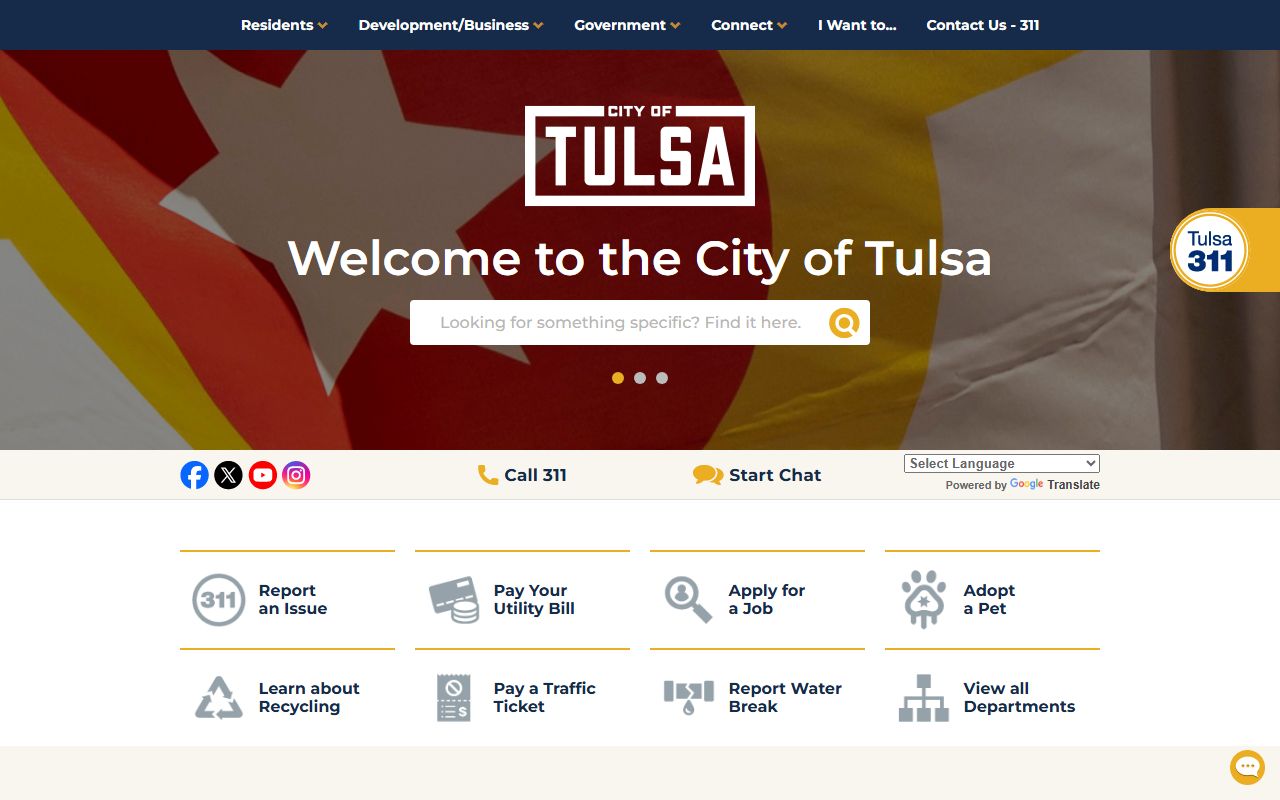
This site links you to city clerk services, open records requests, and other city-level resources that may help with genealogy research in Tulsa.
Other Tulsa County library branches also offer genealogy tools. The Central Library at 400 Civic Center has similar database access. The Broken Arrow Library at 300 W. Broadway and the Bixby Library at 20 E. Breckenridge both serve as branch locations in the Tulsa City-County Library system.
Tulsa Vital Records for Genealogy
Birth and death certificates in Oklahoma are handled by the state. The Oklahoma State Department of Health Vital Records Service at 1000 NE 10th St, Oklahoma City maintains all state vital records. However, Tulsa has a local pickup office at the James O. Goodwin Health Center, 5051 S. 129th East Ave, Tulsa, OK 74134. Will call hours are 12:00 to 4:45 p.m. Monday through Friday. Records must be ordered in advance by phone at (405) 426-8880 or online. You can not walk in and get same-day service.
Under Oklahoma Statutes Title 63, Section 1-323, birth records become open after 125 years and death records after 50 years. Until then, you need to be the person named, a family member, or a legal rep. A genealogist needs written consent from the subject or a relative of the deceased, plus proof of the family link.
The free OK2Explore index lets you search Oklahoma births and deaths at no cost. Births more than 20 years old and deaths more than 5 years old show up in the index. This is a great first step before ordering a certified copy. The index shows the name, date, and county, which helps you confirm what you need before spending money on a full certificate.
The Tulsa Genealogical Society also supports researchers in the Tulsa area with publications and programs.

The society can be reached at PO Box 35106, Tulsa, OK 74153, or by phone at (918) 814-1258. They hold meetings and provide guidance on local research methods.
Tulsa Historical and Genealogy Societies
The Tulsa Historical Society and Museum at 2445 South Peoria, Tulsa, OK 74114 keeps photograph collections, manuscript collections, oral histories, and a research library. Their phone number is (918) 712-9484. These collections can fill in gaps that official records leave behind, especially for family photos or personal stories tied to Tulsa's past.
The Gilcrease Museum at 1400 N. Gilcrease Museum Rd holds the John Ross Papers, which are Cherokee records. If your family tree connects to the Cherokee Nation, this is a source worth checking. The museum phone number is (918) 596-2700. Between the Gilcrease collection and the Dawes Rolls access at the library, Tulsa has some of the strongest Native American genealogy resources outside of the Oklahoma Historical Society in Oklahoma City.
For statewide support, the Oklahoma Genealogical Society in Oklahoma City publishes a quarterly journal and offers research help. The Oklahoma Historical Society Research Center at 800 Nazih Zuhdi Drive in OKC has free in-library access to Ancestry, Fold3, HeritageQuest, Newspapers.com, and more. The Gateway to Oklahoma History is a free digital archive with newspapers, photos, and maps you can search from home.
Note: Pre-statehood records before 1907 often fall under Indian Territory records held at the Oklahoma Historical Society or the National Archives at Fort Worth.
Tulsa Cemetery Records
Cemetery records are a key part of genealogy research. In Tulsa, two major cemeteries hold burial data for thousands of residents. Rose Hill Memorial Park at 1701 W. 11th St can be reached at (918) 743-5100. Memorial Park Cemetery at 5111 S. 91st East Ave has a phone line at (918) 627-3551. Both keep records of burial dates, lot locations, and ownership that can help confirm dates and family connections.
Online cemetery databases are useful too. FindAGrave and BillionGraves both have user-contributed records for Tulsa County cemeteries with photos and GPS data. The Oklahoma Cemeteries website at okcemeteries.net has county-by-county transcriptions, many with detailed information and photos. These free tools let you search from home before making a trip to the cemetery office.
Access Tulsa Public Records
Oklahoma's Open Records Act, found at Title 51, Section 24A.5, gives any person the right to inspect and copy government records. Copying fees are capped at $0.25 per page for standard documents and $1.00 for certified copies. This law covers city, county, and state records alike. If you are looking for old city council minutes, property records, or other government documents in Tulsa, this act is what gives you the right to get them.
The City of Tulsa clerk's office at 175 East 2nd Street, Suite 260 handles open records requests for city documents. Christina Chappell serves as City Clerk and the phone number is (918) 596-7513. The office is open Monday through Friday from 8 a.m. to 5 p.m. City records include ordinances, council minutes, contracts, deeds for city property, election records, and bid records. These can add context to your family research, especially if an ancestor worked for the city or owned property.
Note: For court records specifically, use OSCN first since it is free and covers all 77 Oklahoma counties online.
Tulsa County Genealogy
Tulsa sits in Tulsa County, and all marriage, divorce, probate, and court records go through the Tulsa County Court Clerk. For a full look at county-level genealogy resources including the clerk's office, land records, and courthouse details, visit the Tulsa County page.
Nearby Cities for Genealogy Research
Several other cities in the Tulsa metro area have their own genealogy resources and library branches. If your ancestors lived in the greater Tulsa region, these nearby cities may hold records or provide additional research support.