
Cherokee County Genealogy
Cherokee County genealogy records go back to 1907 and are kept at the courthouse in Tahlequah, the capital of the Cherokee Nation. This is one of the most important counties in Oklahoma for tribal genealogy research. The court clerk holds marriage records, divorce filings, probate documents, and court records. The county clerk keeps land records and military discharge files. Beyond the standard county documents, researchers here can tap into Dawes Commission enrollment records, Cherokee census rolls, and Guion Miller applications. Whether you are tracing Cherokee ancestry or searching for early settlers, Tahlequah has some of the richest genealogy resources in the state.
Cherokee County Overview
Cherokee County Clerk Offices
The Cherokee County Court Clerk has marriage records from 1907 to the present. Divorce records, probate files, and court case records also start in 1907. The office is at the Cherokee County Courthouse, 213 W. Delaware Street, Tahlequah, OK 74464. Call (918) 456-0691 for questions. Hours run Monday through Friday, 8:00 AM to 4:30 PM.
The county clerk handles land records from 1907 forward and military discharge records from 1917 to the present. Both offices share the same courthouse address. Cherokee County is part of Judicial District 15, which also includes Adair, Muskogee, Sequoyah, and Wagoner counties.
| Office | Cherokee County Court Clerk |
|---|---|
| Address |
Cherokee County Courthouse 213 W. Delaware Street Tahlequah, OK 74464-3639 |
| Phone | (918) 456-0691 |
| Hours | Monday through Friday, 8:00 AM to 4:30 PM |
Cherokee Tribal Genealogy Records
Tahlequah is the capital of the Cherokee Nation. That fact makes Cherokee County the center of tribal genealogy in Oklahoma. If your ancestors were Cherokee, you have access to records here that do not exist anywhere else. The Dawes Commission enrollment records list individuals who applied for tribal membership between 1898 and 1906. The rolls include name, age, sex, blood quantum, census card number, tribe, and enrollment number. The Oklahoma Historical Society has digitized Cherokee Dawes Packets, which contain even more detail including family relationships and testimonies.
Guion Miller applications are another key resource. These were filed by Eastern Cherokee descendants seeking compensation from the federal government. The John Vaughn Library at Northeastern State University in Tahlequah holds a collection of Guion Miller Applications. The Ballenger Room at the same library has Cherokee census records and other tribal documents. Call the university for current access information.
Birth affidavits for minor Cherokees from 1902 to 1906 are included in the Dawes Commission application files. These are among the few birth records for Cherokee children from before statehood. They list the child's name, parents' names, date of birth, and other family details. Federal census records from 1900 to 1920 and Cherokee Nation census rolls also cover families in this area.
The Cherokee Heritage Center in Park Hill, near Tahlequah, offers genealogy research help. Staff can guide you through the Dawes Rolls and other Cherokee Nation records. This center is one of the best places to start if you are new to Cherokee genealogy.
Note: Many early Cherokee records are written in the Cherokee syllabary, which may require translation help from tribal resources.
Cherokee County Records Online
The Oklahoma State Courts Network covers Cherokee County court records. Select "Cherokee" from the county dropdown to search by name or case number. The system is free and shows divorce filings, probate cases, and civil matters from the mid-1990s forward.
FamilySearch has microfilmed Cherokee County marriage records from 1907 to 1929 and a marriage index covering 1907 to 1980. You can search the FamilySearch catalog online to find these film numbers and then view them at a local FamilySearch center or order copies. These are scans of the original marriage register books from the courthouse.
The Cherokee County Linkpendium page gathers dozens of genealogy links for this county in one place. It covers census records, church archives, cemetery databases, and tribal resources.
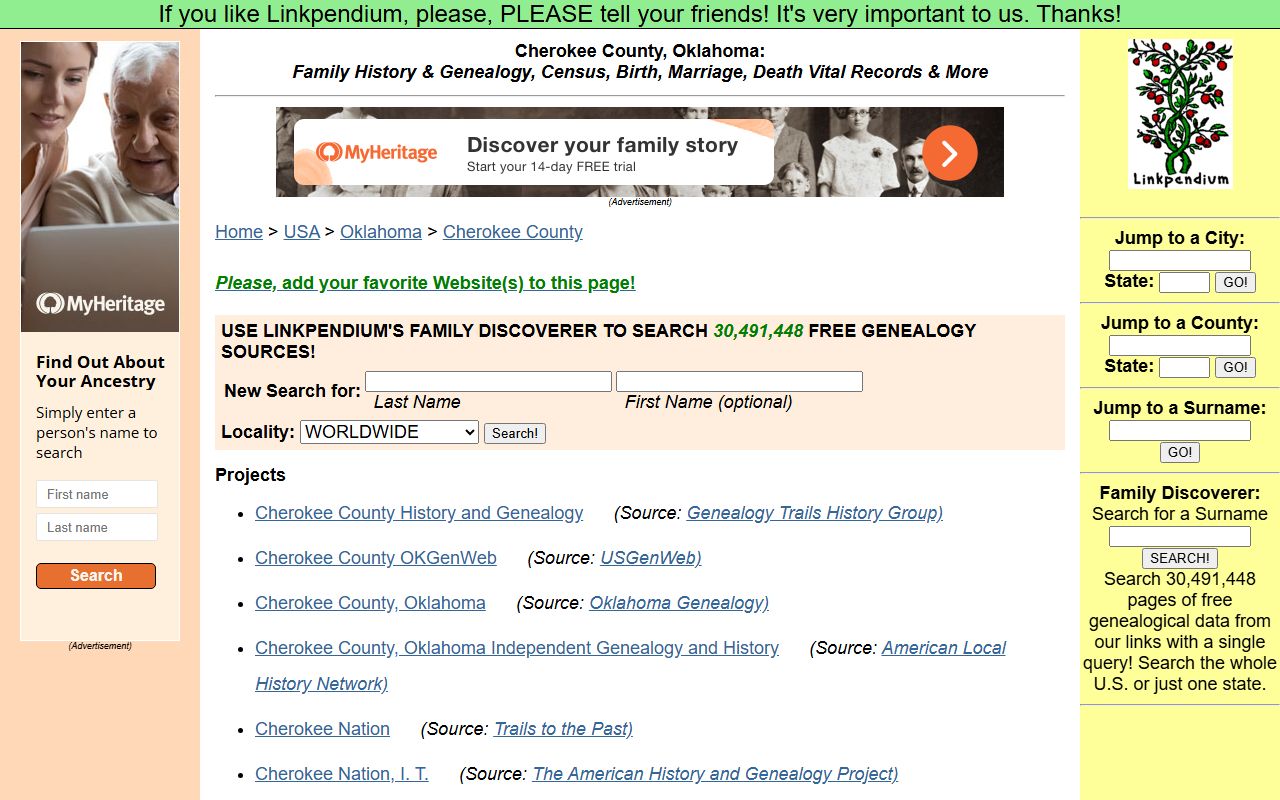
This directory connects you to sources that are spread across many different websites and archive systems.
State and Federal Resources for Cherokee County
The Oklahoma Historical Society Research Center in Oklahoma City has the most complete collection of Cherokee tribal records outside of the Nation itself. You can use Ancestry Library Edition, Fold3, and HeritageQuest for free at the research center reading room. The Gateway to Oklahoma History has digitized newspapers from the Tahlequah area going back more than a century.
The National Archives at Fort Worth holds Bureau of Indian Affairs records for Oklahoma, including Cherokee agency records, school records, and land allotment files. Indian Census Rolls from 1885 to 1940 are available there. The BLM General Land Office Records has federal land patents for Cherokee County.
The Oklahoma Genealogical Society publishes quarterly journals that sometimes feature Cherokee County families and research tips. Under the Oklahoma Open Records Act, Title 51 Sections 24A.1 through 24A.33, most county records are open to the public. Marriage, land, and probate files have no access restrictions. Birth records are sealed for 125 years and death records for 50 years under Title 63 Section 1-323.
Cherokee County Marriage and Probate Records
Marriage records at the court clerk start in 1907. Each license includes the names of both parties, their ages, birthplaces, parents' names, date of marriage, officiant, and witnesses. Some earlier marriages may appear in Dawes Commission or Guion Miller files if the marriage was used as evidence of tribal membership. These cross-references can help you find records you might otherwise miss.
Probate records begin in 1907. The court clerk keeps wills, estate files, guardianship documents, and property inventories. For Cherokee families, probate records are especially useful because they often name heirs and show how allotment land was passed down through generations. Tribal citizenship records can also tie into probate files when inheritance was linked to tribal enrollment status.
Cities in Cherokee County
Tahlequah is the county seat and the largest city. All genealogy records are filed at the courthouse there. Other communities include Hulbert, Keys, Welling, and Park Hill. None have their own records offices.
Nearby Counties
Cherokee County borders several other counties in northeast Oklahoma. Families in this region often moved between these areas, so checking nearby county records can fill in gaps.