
Sequoyah County Genealogy
Sequoyah County genealogy records cover families who settled in the eastern edge of Oklahoma along the Arkansas border. The county seat is Sallisaw, and records go back to 1907 when it was carved from Cherokee Indian Lands. You can search marriage logs, court files, probate cases, and land deeds through the county offices or free online tools. Cherokee Nation connections run deep here, so tribal enrollment files and Dawes rolls often tie into local genealogy work. Researchers tracing roots through this part of the state will find both county and tribal sources useful for building a complete family picture.
Sequoyah County Overview
Sequoyah County Clerk Offices
The Sequoyah County Clerk sits at 120 E. Chickasaw Ave in Sallisaw. This office handles land records, military discharge papers, and other recorded documents. The phone number is (918) 775-4517. Hours run Monday through Friday, 8:00 AM to 4:30 PM. Staff can pull files while you wait if you visit in person. Land records date back to 1907 when Sequoyah County was formed.
The Court Clerk is a separate office that keeps marriage, divorce, probate, and court records for Sequoyah County. Gina Cox serves as Court Clerk. Her office is at 120 E. Chickasaw St, Suite 205, Sallisaw, OK 74955. You can reach her at (918) 775-4517. All of these records start from 1907. Marriage records include the names of both parties, ages, and witnesses. Probate files go back to statehood as well and contain wills, estate inventories, and lists of heirs. If you need a certified copy, the fee is $1.00 per page for certification. Standard copies cost $0.25 per page, and the office charges $25.00 per hour for research after the first 15 minutes.
School records for Sequoyah County date back even further. The county has school census files from 1895 to 1936 that predate statehood. These can help trace families in the area before formal county records began.
| County Clerk | 120 E. Chickasaw Ave, Sallisaw, OK 74955 |
|---|---|
| Phone | (918) 775-4517 |
| Court Clerk | 120 E. Chickasaw St, Suite 205, Sallisaw, OK 74955 |
| Court Clerk Phone | (918) 775-4517 |
| Hours | Monday - Friday, 8:00 AM - 4:30 PM |
Searching Sequoyah County Records Online
The Oklahoma State Courts Network is the best free tool for looking up Sequoyah County court cases. Pick "Sequoyah" from the county list on the search page. You can search by last name, first name, case number, or date range. The system covers cases from the mid-1990s forward. It shows docket entries, party names, and case status. Sequoyah County sits in Judicial District 15 along with Cherokee, Adair, Muskogee, and Wagoner counties.
For land records, check the SequoyahRecords.org portal. It offers public records searches that include property records, court records, and other county documents. The site lets you search by name or property details. Land deed records in Sequoyah County start from 1907 and show who bought, sold, or transferred real estate. Deed recordings cost $18.00 for the first page and $2.00 for each page after that. Marriage licenses run $50.00 or just $5.00 if the couple completes a counseling course beforehand.
The OK2Explore index from the Oklahoma State Department of Health is useful for finding birth and death record entries. This free search tool lets you check if a vital record exists before ordering a certified copy. Under Title 63 Section 1-323 of Oklahoma law, birth records open after 125 years and death records after 50 years.
Note: OSCN records for Sequoyah County go back to the mid-1990s, so older cases need to be searched in person at the courthouse in Sallisaw.
Sequoyah County Genealogy Resources
Sequoyah County has deep Cherokee ties. The county was formed from Cherokee Indian Lands, and many early residents were Cherokee citizens or their descendants. The Dawes Rolls at the Oklahoma Historical Society list names, ages, blood quantum, and family connections for members of the Five Civilized Tribes who enrolled between 1898 and 1914. If your Sequoyah County ancestors had Cherokee roots, these enrollment cards are critical documents.
The Sequoyah County Historical Society in Sallisaw keeps local history materials. The Sallisaw Public Library also holds a collection of area history files. For Cherokee Nation records specifically, the Cherokee Nation Archives in nearby Tahlequah have tribal enrollment files, census records, and court documents that often overlap with Sequoyah County genealogy data. The Oklahoma Historical Society Research Center in Oklahoma City provides free access to Ancestry Library Edition, census microfilm, and land allotment files.
The Gateway to Oklahoma History portal has digitized newspapers, photos, and maps from across the state. You can search for old Sequoyah County newspaper articles that include obituaries, marriage notices, and birth announcements. The Bureau of Land Management website has federal land patents showing original allotments and homestead claims in the county.
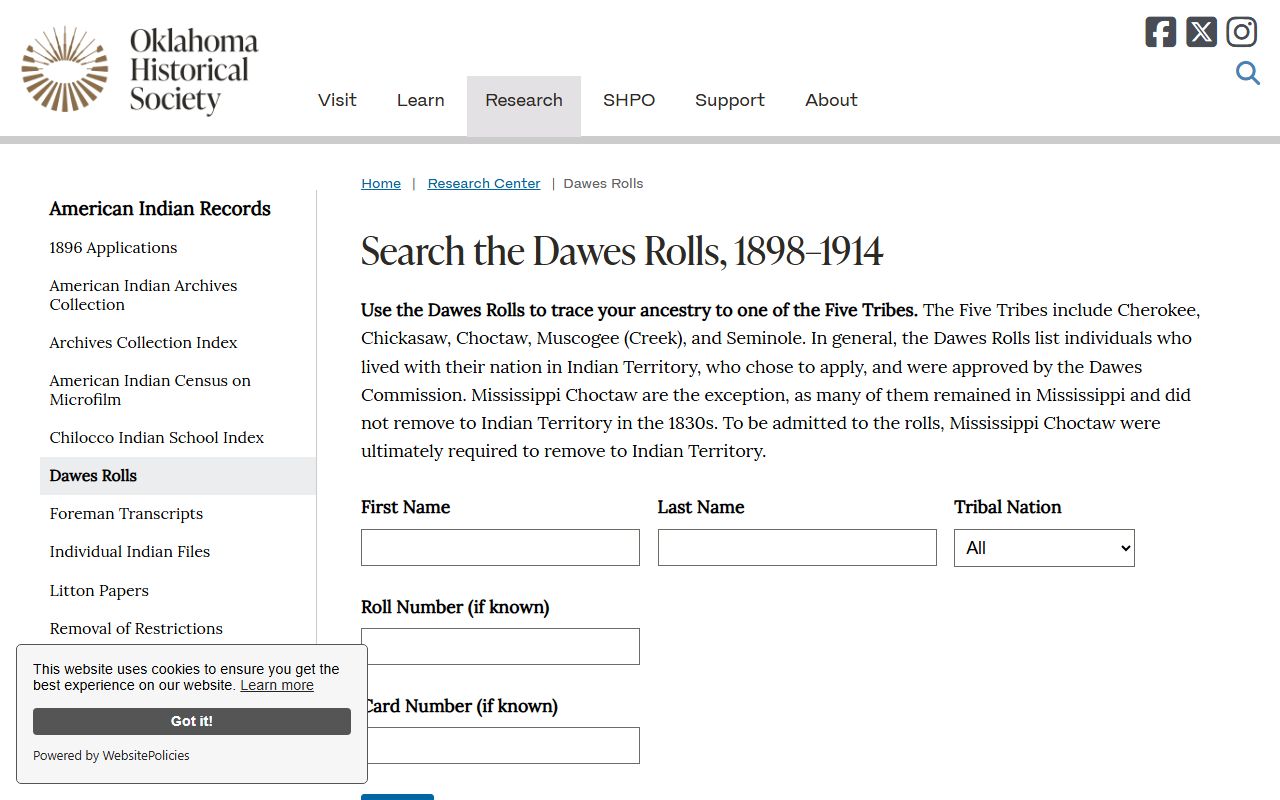
The Dawes Rolls database is especially relevant for Sequoyah County research because so many local families trace back to Cherokee Nation enrollment. You can search by name and find census cards with detailed family information.
What Sequoyah County Records Show
Marriage records from the Sequoyah County Court Clerk include the names of the bride and groom, their ages, birthplaces, and the names of parents. Witnesses and the officiant are also listed. These records start in 1907 and run to the present. The parents' names on a marriage license can help you trace back a whole generation. Divorce records start from 1907 too and contain the names of both parties, grounds for dissolution, and any property or custody terms.
Probate files in Sequoyah County are packed with genealogy data. They name the deceased, list all heirs, and show how assets were split up. Estate inventories, claims, and distribution records are all part of the file. Cherokee allotment-related probate cases are common here and may include references to tribal enrollment numbers. These files often name family members who do not appear in any other record type.
Court records from 1907 cover civil and criminal cases. Land records from the same year show transfers, sales, and original allotments. Under Oklahoma's Open Records Act, Title 51 Sections 24A.1 through 24A.33, the public has the right to inspect most government records. Standard copies are $0.25 per page. Certified copies cost $1.00 per page. Digital copies on CD or DVD run $10.00 per disc.
Vital Records for Sequoyah County
Birth and death records are held at the state level. The Oklahoma State Department of Health Vital Records Service at 1000 NE 10th Street in Oklahoma City keeps all birth and death certificates. Registration started statewide in 1908. You can search the free OK2Explore index to find a record before you order a copy.
Marriage and divorce records are public in Oklahoma. There is no waiting period to get them. You just need to contact the Sequoyah County Court Clerk with names and approximate dates. The Oklahoma Genealogical Society publishes resources on territorial records and Native American vital statistics that can help fill gaps for Sequoyah County families who lived here before statehood. The National Archives at Fort Worth has Bureau of Indian Affairs records, Dawes census cards, and school records from the Indian Territory era.
Note: Marriage and divorce records in Oklahoma are public with no waiting period, but birth and death records have time restrictions under state law.
Cities in Sequoyah County
Sequoyah County includes the city of Sallisaw, which is the county seat, along with smaller towns like Muldrow, Roland, Vian, and Gore. All genealogy records for these areas are filed at the Sequoyah County Clerk offices in Sallisaw. No cities in Sequoyah County meet the population threshold for a dedicated city page, but all records are accessible through the county offices listed above.
Nearby Counties
If your family moved around eastern Oklahoma, check records in these neighboring counties too. Families often crossed county lines for work, land, or marriage.